Pastured Chicken: Better Food Starts With a Better Life
Pastured Chicken: Better Food Starts With a Better Life
Wednesday, 08 July 2026
Chicken has become one of the cheapest meats available to us, and that should make us stop and think. Not because chicken is bad. Chicken is brilliant. A roast chicken feeds a family, the bones make stock, and the leftovers become tomorrow’s meal. Good chicken is not fancy food. It is foundational food. The question is not just, “How cheap can chicken be?” but “what life, farming system and hidden costs sit behind this chicken?”
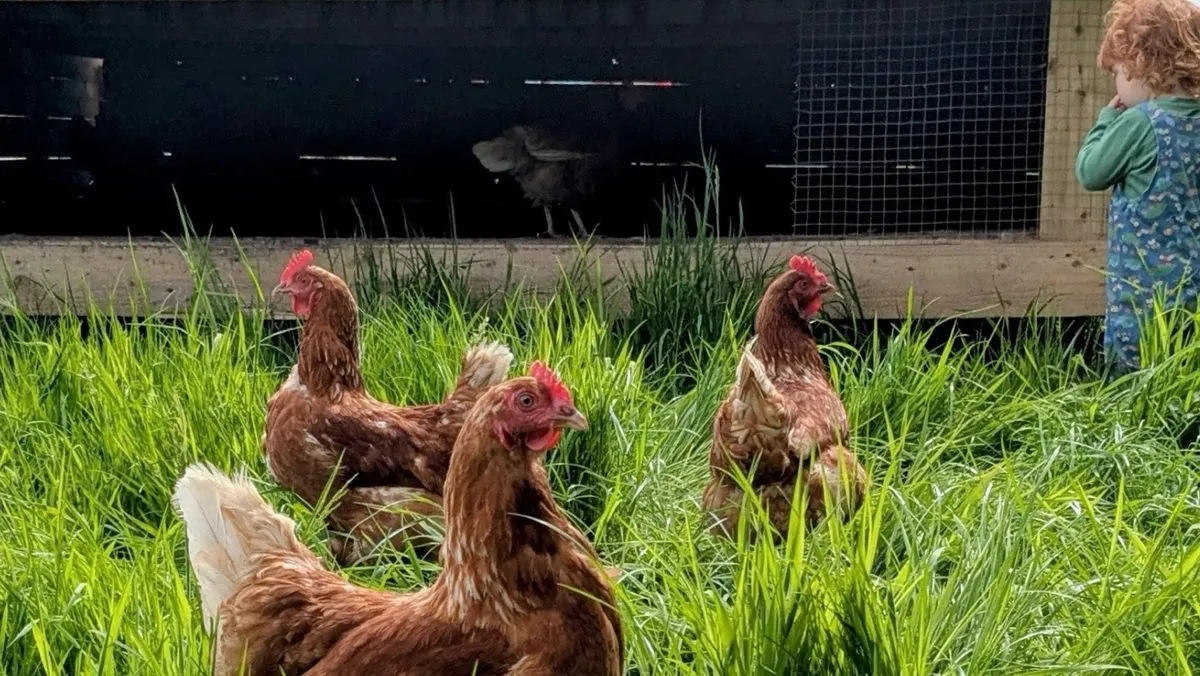
Pastured chicken is not a magic label. It does not mean birds live on grass alone. Chickens still need good feed, water, shelter, warmth when young, predator protection, and careful stockmanship. For us, pasture is not a decorative extra, but the cornerstone of the system. The birds are outside, moving over living ground: scratching, pecking, foraging, dusting, resting, eating, drinking and behaving like chickens. The pasture is not just a “view”. It is part of their life.
That outside life is richer, but it is not risk-free. Predation, bad weather, disease pressure, bullying and boredom are real welfare risks, but when managed well, they also provide the hormetic stress which triggers the expression of their animal instincts. So we cannot just lob birds onto a field and let them fend for themselves, but we also cannot shelter them entirely without weakening them. The job is to give them a more natural life inside a managed system with some risk and adversity, but not too much that it veers into neglect: shelter, fencing, water, good feed, and regular moves onto clean ground all achieve this.
It is important to understand that welfare is not just the absence of suffering. It includes the opportunity to express natural behaviour: scratching, pecking, moving, exploring and resting in a more natural rhythm. A chicken given that chance is not just a unit of production. It is an animal living a more complete life.
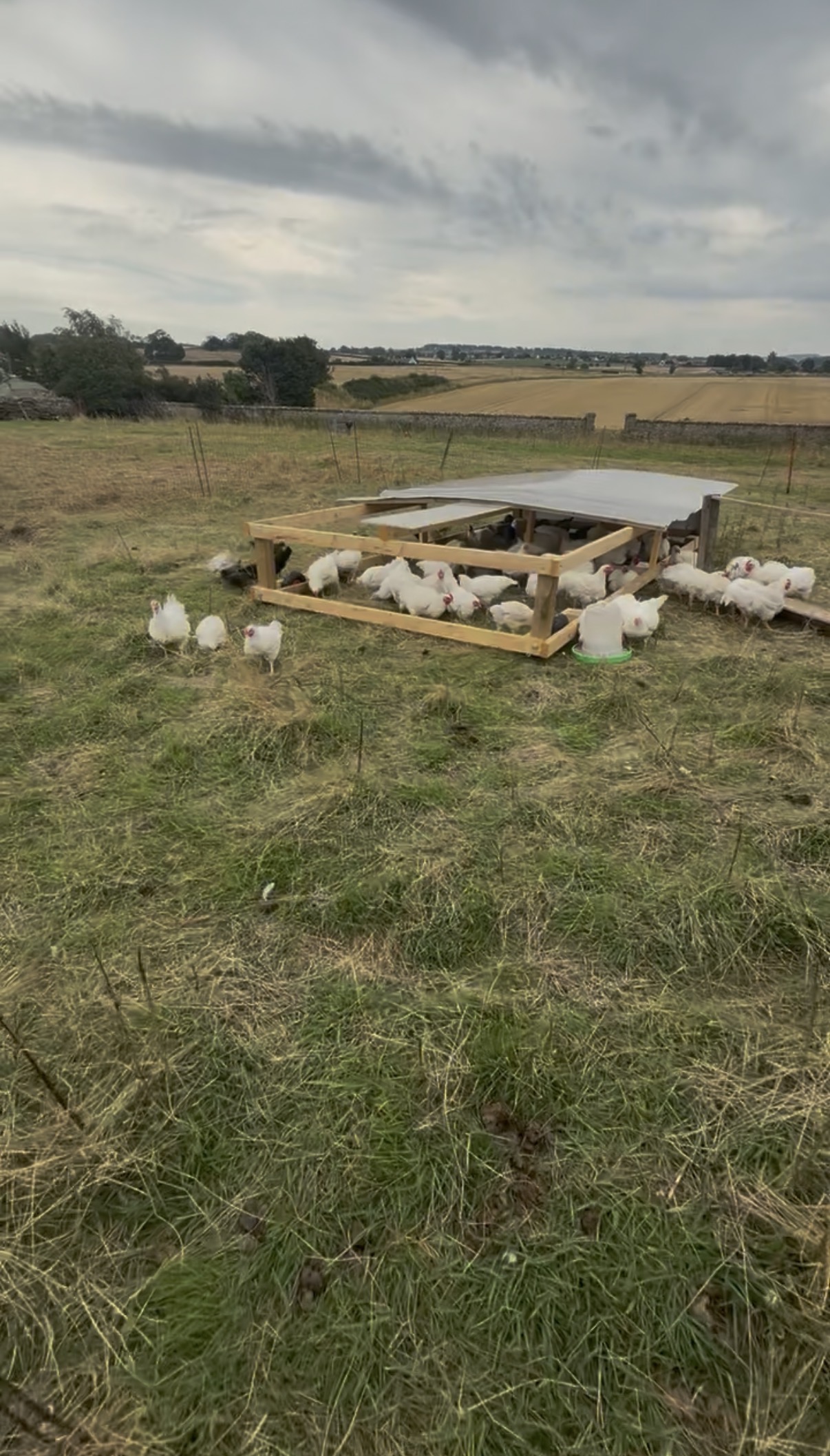
Good range management matters too. Pasture can become “fowl sick” if overused. It is not enough to open a door and call it free range. You must design the system so birds use it, and so the land gets adequate rest.
This is where regenerative farming and good food meet. Moved properly, poultry can spread fertility, stimulate pasture, then move on before one patch takes too much pressure. Done badly, poultry can damage ground. Done well, it cycles fertility and treats land as alive. A diverse pasture also provides environmental enrichment which improves welfare by encouraging foraging activity and reducing stress-related behaviours; synthetic toys and boredom busters do work, but so do iPads for children (eyebrow raise).
Breed matters too. One problem with very fast-growing chicken is heavy selection for rapid growth. RSPCA Assured only allows breeds assessed as having better health and welfare than conventional fast-growing breeds, and links fast-growing genetics with higher risks of lameness and heart defects. The point is not to sneer at farmers working under brutal commercial pressure, but to acknowledge that genetics, feed, movement and system are interdependent. So for example, we mitigate the commercial pragmatic need for a fast-growing bird, by limiting feed for a few hours a day and using a lower protein content. This stimulates the birds to eat more forage when fasted and as a result, they exercise more, grow slower, and live with a greatly reduced experience of the issues experienced by their commercially reared compatriots.
So is pastured chicken nutritionally better? The honest answer is: sometimes, in some ways, but only when done well. A meta-analysis comparing broilers with and without pasture access found lower fat concentrations in breast, thigh and drumstick meat, and higher omega-3 and protein concentrations when forage consumption was high. But pasture is not fairy dust. Feed, breed, age, movement, season, forage, sunlight, slaughter age and stockmanship all shape the final bird in myriad ways too.
For the purist, that is the point: food quality comes from the integrity of the whole system, not from one marketing word or gimmick.
For the cook, the difference is practical. Pastured birds may have better taste or flavour, while also bringing possible trade-offs in texture and moisture. A bird that has moved, grown more slowly and lived differently behaves differently in the pan.
So, cook it like a proper bird. Do not blast the breast until it is dry and then blame the chicken. Roast it carefully. Rest it properly. Use the carcass. Make stock. Let the legs take a slower cook if they need it. A good pastured chicken is not a disposable protein slab. It is an ingredient with a story, a structure and a second life in the kitchen.
And yes, it costs more. Land, feed, fencing, water, housing, bedding, processing, chilling, packaging and delivery all cost money. Moving birds takes time. Smaller batches take more handling.
Cheap chicken often hides those costs somewhere else: in animal welfare, farmer wellbeing, soil, labour, flavour, resilience, or public trust. Industrial poultry is almost unimaginable in scale, and we are all too willing to overlook that reality. One slaughterhouse can kill over 200,000 birds in a day. As terrible as that process is for the birds, imagine the human misery of slaughtering that volume of birds at that pace and dealing with the byproducts. Who wants that job? Any takers?
Pastured chicken asks for a different bargain. Pay a bit more, waste less, use the whole bird, eat with intention, and support a farming system trying to produce food without stripping meaning out of it, or accepting animal suffering, environmental degradation, and human misery as a silent cost of our cheap chicken.
And make no mistake: the ethical and culinary parts are not separate. The best food is where ethics and eating quality meet. Even the Bible had this one right in the simple phrase, ‘a bad tree cannot bear good fruit’. If the chicken had a terrible life and died miserable, stressed, and diseased, it simply cannot give you a truly nourishing meal. It will sustain you and provide protein for sure. But health and vigour cannot be given by the body of an animal that did not posses it. How could we possibly expect it to?
At Bramblewood Farm, we do not raise chickens this way because it is easy or cheap. It is hard, and to be sure, we make mistakes. But we are always trying to improve both the quality of the birds’ lives and the efficiency of the system by learning all that we can and caring deeply about our animals and the health of the people they will feed.
This is where I step one foot off cold empirical data and onto logic and belief: we do it because we believe it is the only way to produce truly nourishing food. What’s better for the animal, is better for the soil, is better for the farmer, is better for the cook, is better for the eater, is better for the people around them. Sounds a lot like karma to me. Or dependant origination if you like; the idea that your current circumstances are a result of countless previous decisions and actions taken by you and those around you. In short; you are what you eat!
So, let’s all of us make those small but immeasurably important choices now so that tomorrow can be just a little better, for us and those we care about. So, what will your food pound vote for? Good fruit or bad?